

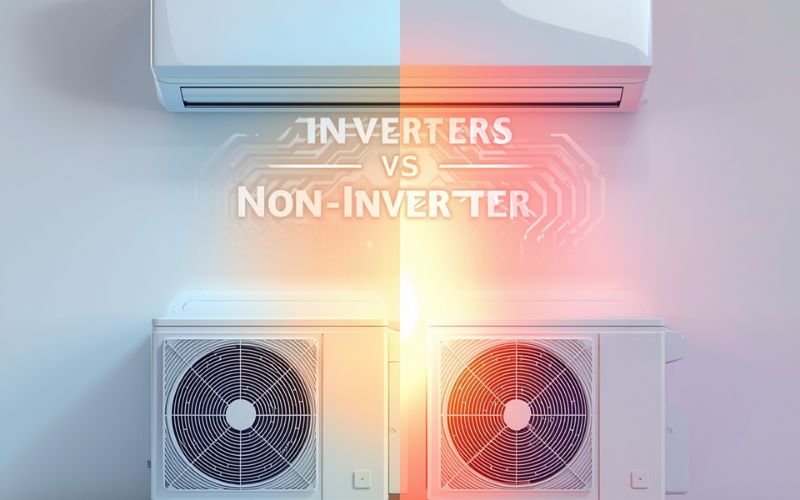
Inverter ACs are more energy-efficient (saving 30–50% electricity), quieter, and provide consistent cooling by adjusting compressor speed. Non-inverter ACs use a fixed-speed on/off cycle, making them cheaper upfront but less efficient and slightly noisier. Inverter ACs are ideal for long-term use, while non-inverter ACs suit occasional usage.
What Is an Inverter AC?
An inverter AC uses a variable-speed compressor that adjusts its power based on the room temperature instead of constantly turning on and off.
How it works:
- Starts at high speed to cool the room quickly
- Slows down once the desired temperature is reached
- Maintains a steady temperature without switching off
Key benefits:
- Consistent cooling
- Lower electricity consumption (can save up to 30–50%)
- Quieter operation
- Longer lifespan due to reduced wear and tear
What Is a Non-Inverter AC?
A non-inverter AC uses a fixed-speed compressor that operates in an on/off cycle.
How it works:
- Runs at full power until the set temperature is reached
- Turns off completely
- Restarts when the temperature rises
Key benefits:
- Lower upfront cost
- Simpler technology
- Suitable for short-duration usage
Inverter vs Non-Inverter AC: Quick Comparison
| Feature | Inverter AC | Non-Inverter AC |
|---|---|---|
| Compressor | Variable speed | Fixed speed |
| Energy Consumption | Low | High |
| Cooling | Consistent | Fluctuates |
| Noise Level | Low | Higher |
| Electricity Bills | Lower | Higher |
| Initial Cost | Higher | Lower |
| Lifespan | Longer | Moderate |
Key Differences Explained
1. Energy Efficiency
Inverter ACs are more energy-efficient because they avoid repeated compressor restarts. This reduces power consumption significantly over time.
👉 Best for daily and long-hour usage.
2. Cooling Performance
Inverter ACs maintain a stable temperature, while non-inverter ACs may cause slight temperature fluctuations.
👉 Better comfort with an inverter AC.
3. Electricity Bills
Although inverter ACs cost more initially, they help reduce monthly electricity bills, especially during peak summer.
👉 Long-term savings favor inverter AC.
4. Noise Levels
Inverter ACs operate quietly since the compressor runs at variable speeds, unlike non-inverter models.
👉 Ideal for bedrooms and offices.
5. Cost Consideration
Non-inverter ACs are cheaper upfront, but inverter ACs provide better value over time.
👉 Choose based on budget vs long-term savings.
Which AC Should You Choose?
Choose an Inverter AC if:
- You use AC for 6–8 hours or more daily
- You want lower electricity bills
- You prefer consistent cooling
- You are investing for long-term performance
Choose a Non-Inverter AC if:
- You use AC occasionally (1–3 hours/day)
- You have a limited budget
- You need a basic cooling solution
Are Inverter ACs Always Better?
Not always.
If your usage is minimal, a non-inverter AC can still be a practical and cost-effective choice. However, for most households and offices with regular usage, inverter ACs offer better efficiency, comfort, and durability.
Final Verdict
- Best for efficiency and comfort: Inverter AC
- Best for budget and short-term use: Non-inverter AC
For modern homes and businesses, inverter ACs are generally the smarter investment.
Choose the Right AC for Long-Term Comfort
Selecting the right air conditioning system is not just about cooling—it’s about efficiency, reliability, and long-term savings. Partnering with a trusted AC manufacturer in India ensures you get products designed for Indian conditions and performance needs.
Oscar India offers high-quality air conditioning solutions built for durability, energy efficiency, and consistent cooling. Whether for residential or commercial use, choosing the right AC today can significantly impact your comfort and energy costs in the future.