

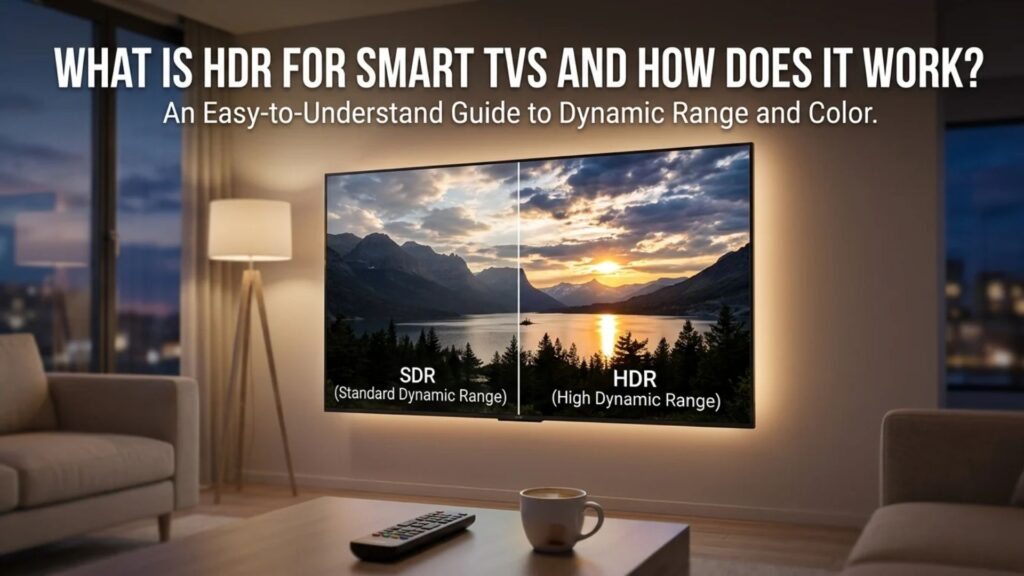
HDR (High Dynamic Range) is a display technology that improves picture quality by expanding the range of brightness, contrast and colours a TV can produce. It makes bright areas look more realistic, reveals details in darker scenes and displays richer colours, creating a more lifelike viewing experience compared to standard dynamic range (SDR).
What Does HDR Mean in a Smart TV?
HDR stands for High Dynamic Range. In a smart TV, it refers to a technology that enhances how images are displayed by improving the difference between the brightest and darkest parts of a picture.
Traditional SDR televisions have limitations in reproducing brightness levels and colour variations. HDR overcomes some of these limitations by allowing compatible TVs to display brighter highlights, deeper shadows and a wider range of colours.
For example, when watching a scene featuring a sunset, an HDR-enabled TV can show the brightness of the sun while retaining details in the surrounding clouds and darker areas of the landscape. This creates a more natural and detailed picture.
HDR is particularly useful for watching movies, streaming content, playing video games and viewing nature documentaries where visual detail and colour accuracy matter.
How Does HDR Technology Work in Smart TVs?
HDR works by combining specially mastered content with a compatible display that can reproduce a wider range of brightness and colours. Both the content and the television need to support HDR for viewers to experience its benefits.
Here is how the technology works:
1. Expands the Brightness Range
HDR allows a television to display brighter highlights without losing details in the surrounding areas. It also helps retain visual information in darker scenes.
This is useful when watching movies with contrasting lighting, such as a brightly lit room with dark corners or a night scene featuring streetlights.
2. Improves Colour Reproduction
HDR supports a wider colour gamut, allowing compatible TVs to reproduce more shades and variations. Colours appear richer and more accurate, particularly in scenes featuring landscapes, skin tones, skies and detailed visual effects.
3. Uses Metadata to Adjust Picture Quality
HDR content can contain metadata that provides information about brightness and colour levels. The TV uses this information to adjust how the picture is displayed.
Depending on the HDR format, metadata can be static, applying the same instructions throughout a programme, or dynamic, allowing adjustments for individual scenes or frames.
4. Works with Compatible Display Technology
The television’s display panel, brightness capabilities, contrast performance and image processing all influence the final HDR experience.
Simply supporting an HDR format does not guarantee excellent picture quality. The TV must also have the hardware and processing capabilities to reproduce the additional visual information effectively.
What Are the Different Types of HDR Formats?
Not all HDR technologies work in the same way. Different formats use different approaches to process brightness, colour and metadata.
The most common HDR formats include:
HDR10
HDR10 is one of the most widely supported HDR formats in smart TVs. It uses static metadata, meaning the brightness and colour instructions remain consistent throughout the content.
It supports 10-bit colour depth and is commonly used in streaming platforms, Blu-ray content and gaming.
HDR10+
HDR10+ builds on HDR10 by introducing dynamic metadata. Instead of applying the same brightness instructions throughout a film, it can adjust picture settings scene by scene.
This helps compatible televisions optimise the viewing experience based on the lighting and visual requirements of individual scenes.
Dolby Vision
Dolby Vision is an advanced HDR format that uses dynamic metadata to optimise brightness, contrast and colour reproduction.
It supports up to 12-bit colour depth at the format level, although the actual capabilities depend on the television’s display hardware. Dolby Vision-compatible TVs can adjust picture information according to the requirements of individual scenes.
HLG (Hybrid Log-Gamma)
HLG is an HDR format developed primarily for broadcast television. It is designed to work with broadcast systems and is compatible with both HDR and certain SDR display environments.
It is particularly relevant for live television broadcasts and sports content.
What Is the Difference Between HDR and SDR?
The main difference between HDR and SDR (Standard Dynamic Range) is the range of brightness and colours they can reproduce.
SDR has been the traditional standard for television displays and video content. HDR expands these capabilities to deliver more detailed highlights, improved shadow visibility and richer colours.
| Feature | HDR | SDR |
|---|---|---|
| Brightness | Wider brightness range | More limited brightness range |
| Contrast | Better potential for highlight and shadow detail | More limited tonal range |
| Colour | Supports wider colour gamuts | Generally uses a narrower colour gamut |
| Metadata | Can use static or dynamic metadata | Does not use HDR metadata |
| Viewing experience | More lifelike and detailed when properly implemented | Standard picture quality |
However, HDR does not automatically make every picture look better. The final result depends on the quality of the source content, display panel and image processing capabilities of the television.
What Are the Benefits of HDR in Smart TVs?
HDR can improve the viewing experience across different types of content. Its main benefits include:
1. More Realistic Images: HDR helps reproduce natural-looking brightness and colours, making scenes appear closer to how they look in real life.
2. Better Detail in Dark Scenes: It can preserve details in shadows and darker areas without making the entire picture appear washed out.
3. Brighter Highlights: Bright elements such as sunlight, reflections, fireworks and headlights can appear more pronounced.
4. Richer Colours: Support for wider colour gamuts allows compatible TVs to display a broader range of shades.
5. Enhanced Gaming Experience: HDR-compatible games can offer more detailed environments, realistic lighting effects and improved visual depth when played on compatible hardware.
What Should You Check Before Buying an HDR Smart TV?
If you are planning to purchase an HDR-enabled television, checking the HDR logo alone is not enough. Consider the following factors to understand its actual display performance.
- HDR Format Support: Check whether the TV supports HDR10, HDR10+, Dolby Vision or HLG, depending on your viewing preferences.
- Peak Brightness: Higher peak brightness can help reproduce HDR highlights more effectively, although brightness should be considered alongside contrast and tone mapping.
- Contrast Performance: Good contrast helps distinguish bright and dark areas, improving the overall HDR experience.
- Colour Accuracy: Look for a TV that can reproduce colours naturally without making images appear excessively saturated.
- Display Panel Technology: LED, QLED and OLED televisions have different approaches to producing brightness, colours and contrast. Their HDR performance can vary significantly.
- Content Compatibility: Ensure that your preferred streaming platforms, games or external devices support the HDR formats available on the television.
It is also important to check whether the TV has suitable HDMI connectivity and supports the required HDR features for external devices such as gaming consoles and media players.
Read More: https://www.oscarindia.in/how-to-choose-the-right-smart-tv/
Does HDR Make a Difference in Everyday TV Viewing?
Yes, HDR can make a noticeable difference, particularly when watching HDR-compatible movies, high-quality streaming content and supported video games.
However, the improvement depends on what you watch and the television you use. Regular SDR channels and videos will not automatically become HDR simply because they are played on an HDR-compatible television. Some TVs offer SDR-to-HDR conversion or upscaling features, but these cannot recreate the original HDR information.
For the best results, choose HDR-compatible content and a television with good brightness, contrast and colour reproduction.
Conclusion
HDR has become an important feature in modern smart TVs because it improves picture quality through better brightness, contrast and colour reproduction. From HDR10 and HDR10+ to Dolby Vision and HLG, different formats offer different ways to enhance compatible content. However, the overall viewing experience depends on how effectively a television’s display technology and image processing handle HDR signals.
If you are exploring televisions with advanced display features, explore Oscar India’s range of smart TVs. As a smart LED TV manufacturer in India, Oscar India focuses on delivering modern television solutions that combine display technology, practical features and an engaging home entertainment experience. Choose a television that matches your viewing requirements and enjoy more immersive entertainment at home.