

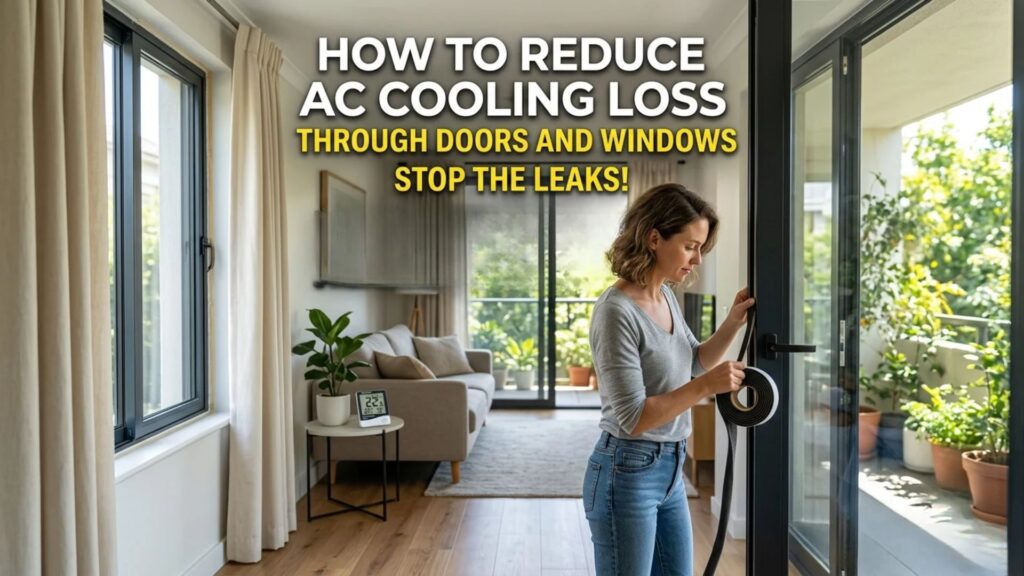
AC cooling loss through doors and windows happens when cooled indoor air escapes through gaps or outdoor heat enters through glass and poorly sealed frames. You can reduce this loss by installing weatherstripping, sealing door gaps, using thermal curtains, and improving window insulation. These measures help maintain comfortable temperatures and reduce unnecessary AC energy consumption.
Why Does AC Cooling Escape Through Doors and Windows?
Your air conditioner might be working properly, yet your room still feels warm. One possible reason is cooling loss through doors and windows.
When warm outdoor air enters through gaps around door frames, sliding windows, or poorly fitted panels, the AC must remove the additional heat. Direct sunlight passing through glass can further increase indoor temperatures.
There are two main causes of cooling loss:
- Air leakage: Unconditioned outdoor air enters through openings while cooled indoor air escapes.
- Solar heat gain: Sunlight transfers heat into the room through windows, even when they are completely closed.
These issues are especially relevant during Indian summers, when high temperatures and intense afternoon sunlight increase cooling demand.
Even an energy-efficient air conditioner from a reliable AC brand may consume unnecessary electricity if the room is poorly sealed or exposed to excessive heat.
Understanding where cooling is being lost is the first step towards improving indoor comfort.
How Can You Identify AC Cooling Loss in Your Room?
Before investing in insulation or new windows, check for common signs of air leakage and heat gain.
Inspect Door and Window Gaps
Look for visible openings around door frames, window edges, and sliding tracks. Damaged rubber gaskets, loose fittings, and worn weatherstripping can allow air to pass through.
On a windy day, hold a lightweight tissue strip near closed windows and doors. Movement may indicate an air leak.
Check for Hot Spots Near Windows
Stand near different windows during the afternoon. If one area feels significantly warmer, direct sunlight or heat transfer through the glass may be responsible.
West-facing windows often receive strong afternoon sunlight, making them particularly important to inspect.
Examine Sliding Aluminium Windows
Sliding aluminium windows are common in Indian homes. Over time, their brush seals may wear out, leaving small gaps between moving panels.
Check the meeting rails, corners, and tracks for damaged seals or improper alignment.
If you notice these problems, targeted repairs may improve cooling retention without replacing the entire window.
What Are the Best Ways to Reduce AC Cooling Loss Through Doors?
Doors frequently allow conditioned air to escape, particularly when they are opened repeatedly or have poorly sealed edges.
Install Weatherstripping Around Door Frames
Weatherstripping creates a flexible seal between a door and its frame.
Rubber, silicone, and foam strips can help close small gaps while allowing the door to open normally.
According to the U.S. Department of Energy, weatherstripping is appropriate for movable joints, while caulking is better suited to stationary gaps.
Choose weatherstripping according to the gap size and door material.
Use Door Sweeps to Block Bottom Gaps
The gap beneath a bedroom or living room door can contribute to unwanted air movement.
Installing a rubber or silicone door sweep helps reduce this leakage.
For uneven floors, a flexible bottom seal may provide better coverage than a rigid strip.
Minimise Frequent Door Opening
Every time a door opens, warmer air can enter the cooled room.
Keep doors closed during AC operation and avoid leaving balconies or adjoining rooms open unnecessarily.
However, never block safety-related ventilation openings or required air passages.
How Can You Prevent Cooling Loss Through Windows?
Windows require attention because they can introduce heat even when there are no visible air leaks.
Use Thermal Curtains or Blackout Blinds
Thick curtains reduce direct sunlight entering a room.
Choose light-coloured curtains with reflective backing for windows exposed to intense sunlight. Keep them closed during peak afternoon hours.
The U.S. Department of Energy recommends closing curtains on sun-facing windows during summer to reduce heat gain.
Apply Solar Control Window Films
Solar control films reduce the amount of solar heat transmitted through glass.
They can be particularly useful for large windows receiving direct sunlight.
Look for films with suitable solar heat rejection and visible light transmission specifications. Confirm compatibility with your existing glass before installation.
Seal Window Frame Gaps
Use suitable sealant around fixed joints where window frames meet surrounding walls.
For sliding windows, replace worn brush seals or gaskets rather than applying sealant to moving sections.
Avoid covering drainage openings, as trapped rainwater can create additional problems.
Consider Double-Glazed Windows
Double-glazed windows contain two glass panes separated by an insulating space, helping reduce heat transfer.
For rooms exposed to strong sunlight, glazing with suitable solar-control properties may provide additional benefits.
According to the U.S. Department of Energy, insulated glazing and low-emissivity coatings can improve window thermal performance.
However, replacing windows is usually more expensive than installing curtains or repairing seals. Prioritise simpler solutions before considering a major upgrade.
Which Solutions Work Best for Different Types of Cooling Loss?
Not every cooling problem requires an expensive modification. The right solution depends on where heat is entering.
| Cooling problem | Recommended solution |
|---|---|
| Gap beneath bedroom door | Rubber or silicone door sweep |
| Air leakage around door edges | Weatherstripping |
| Worn sliding-window seals | Replacement brush seals |
| Strong afternoon sunlight | Thermal curtains or external shading |
| Excessive heat through glass | Solar control film |
| Poorly insulated existing windows | Suitable double glazing |
Practical tip: Start with visible gaps and direct sunlight exposure. These are often easier to address than replacing doors or installing new windows.
Does Better Door and Window Insulation Reduce AC Electricity Bills?
Yes. Better insulation and air sealing can reduce the amount of heat your air conditioner needs to remove.
When less outdoor heat enters the room, the cooling system may run for shorter periods or operate at reduced capacity, depending on the AC technology.
This can improve temperature consistency, reduce unnecessary cooling demand, and support lower electricity consumption.
However, the actual savings depend on room size, outdoor temperature, insulation quality, AC efficiency, and usage habits.
An energy-efficient AC brand can provide suitable cooling technology, but maintaining a well-sealed room remains essential for getting the most from the system.
What AC Settings Help Maintain Cooling Efficiency?
Controlling heat gain works best when combined with proper AC operation.
Maintain a Comfortable Temperature
Set the AC around 24–26°C, adjusting for humidity and personal comfort.
India’s Bureau of Energy Efficiency supports 24°C as an energy-conscious air-conditioning temperature setting.
Avoid unnecessarily lowering the thermostat, as this increases the cooling demand.
Improve Air Circulation
Use a ceiling fan at a comfortable speed to circulate cooled air more evenly.
Keep curtains, furniture, and other objects away from the AC’s indoor airflow path.
Maintain Your Air Conditioner
Clean AC filters according to manufacturer recommendations and arrange periodic professional servicing.
If the room remains warm after sealing gaps and reducing sunlight exposure, ask a qualified technician to check cooling capacity, airflow, and overall system performance.
When Should You Consider Upgrading Your AC?
If cooling remains inconsistent despite proper insulation and maintenance, your air conditioner may be incorrectly sized, ageing, or operating inefficiently.
Before purchasing a replacement, consider room dimensions, ceiling height, sunlight exposure, and the number of occupants.
Compare BEE star ratings and Indian Seasonal Energy Efficiency Ratio (ISEER) values when evaluating suitable air conditioners.
Remember, a larger AC is not automatically better. Correct sizing and efficient operation are essential for comfortable, economical cooling.
Keep Your Room Cooler with Oscar India
Reducing AC cooling loss starts with sealing gaps, managing sunlight, improving window insulation, and maintaining proper AC settings. These practical changes can help your air conditioner maintain consistent indoor temperatures while reducing unnecessary energy consumption.
For dependable home cooling, explore the air conditioner range from Oscar India. Choose an AC Brand that suits your room size, comfort requirements, and energy-efficiency priorities. Discover Oscar India’s cooling solutions and make your home more comfortable throughout the summer.