

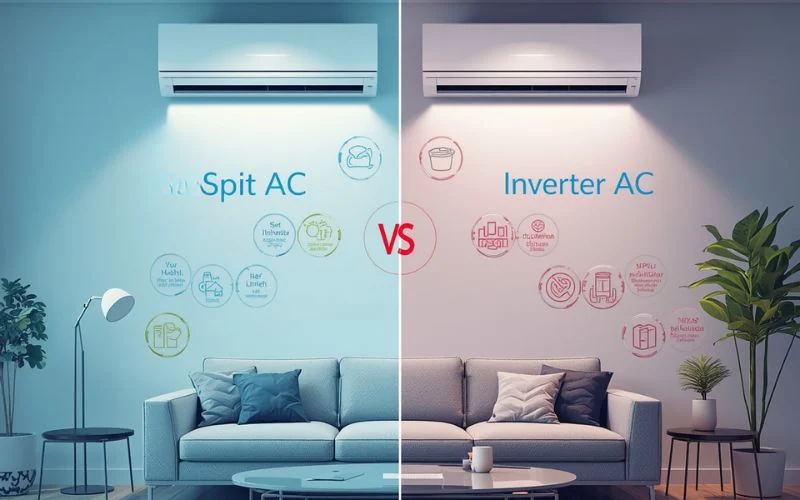
If you want lower electricity bills, quieter operation, and long-term savings, an Inverter AC is usually the better choice. However, if you use your AC occasionally and want a lower upfront cost, a traditional Split AC can still be a practical option. The right choice depends on your budget, usage hours, and cooling needs.
Buying an air conditioner today is not just about cooling a room. Most homeowners now look for energy efficiency, comfort, durability, and lower running costs. That is why many buyers compare Split ACs and Inverter ACs before making a decision.
Although both types provide effective cooling, they work differently and offer different advantages. Understanding these differences can help you choose the best AC for your home or office.
What Is a Split AC?
A Split AC is an air conditioner with two separate units:
- An indoor unit that cools the room
- An outdoor unit that releases heat outside
Traditional Split ACs use a fixed-speed compressor. This means the compressor either runs at full power or switches off completely.
How Does a Split AC Work?
When the room temperature rises above the desired setting, the compressor starts and cools the room quickly. Once the set temperature is reached, the compressor turns off.
After the room becomes warm again, the compressor restarts.
This repeated start-and-stop process increases electricity consumption and can create slight temperature fluctuations.
What Is an Inverter AC?
An Inverter AC is an advanced version of a Split AC that uses variable-speed compressor technology.
Instead of constantly switching on and off, the compressor adjusts its speed according to the room’s cooling requirement.
How Does an Inverter AC Work?
If the room is hot, the compressor runs faster to cool it quickly. Once the desired temperature is achieved, it slows down instead of shutting off completely.
This helps maintain consistent cooling while reducing unnecessary power usage.
Split AC vs Inverter AC: Quick Comparison
| Feature | Split AC | Inverter AC |
|---|---|---|
| Compressor Type | Fixed-speed | Variable-speed |
| Electricity Consumption | Higher | Lower |
| Cooling Consistency | Moderate | Better |
| Noise Levels | Higher | Lower |
| Initial Cost | More affordable | Higher upfront cost |
| Long-Term Savings | Lower | Higher |
| Ideal For | Occasional use | Daily long-hour use |
1. Which AC Saves More Electricity?
Electricity consumption is one of the biggest deciding factors for buyers.
Split AC
Traditional Split ACs consume more electricity because the compressor repeatedly starts and stops. Every restart requires additional power.
Inverter AC
Inverter ACs regulate compressor speed continuously, helping reduce energy consumption and improve efficiency.
Best Option
If you use your AC for several hours every day, an Inverter AC can noticeably lower your electricity bills over time.
2. Which AC Provides Better Cooling?
Both AC types cool rooms effectively, but the experience differs.
Split AC
- Fast cooling initially
- Temperature fluctuations may occur
- Less efficient during continuous usage
Inverter AC
- Stable room temperature
- Smooth and consistent cooling
- Better comfort during long usage
Best Option
For bedrooms, living rooms, and office spaces, Inverter ACs usually provide a more comfortable experience.
3. Which AC Is Quieter?
Noise can affect comfort, especially at night.
Split AC
The compressor turning on and off repeatedly may create noticeable sound.
Inverter AC
The compressor runs continuously at controlled speeds, resulting in quieter performance.
Best Option
If low noise is important, an Inverter AC is usually the better choice.
4. Which AC Costs More?
Split AC
Split ACs are generally more budget-friendly at the time of purchase.
Inverter AC
Inverter ACs cost more because of advanced energy-saving technology.
However, the lower electricity bills can help recover the extra cost over time.
5. Which AC Is Better for Long-Term Savings?
Many buyers only focus on the initial price, but long-term running costs matter more.
Split AC
- Lower purchase cost
- Higher electricity bills over time
Inverter AC
- Higher upfront investment
- Lower monthly power consumption
Best Option
For regular daily use, Inverter ACs are usually more cost-effective in the long run.
Which AC Should You Buy?
Your ideal choice depends on how often you use the air conditioner.
Choose a Split AC If:
- You use the AC occasionally
- Your daily usage is limited
- You want a lower upfront investment
- You need a budget-friendly cooling option
Choose an Inverter AC If:
- You use the AC for long hours daily
- You want lower electricity bills
- You prefer quieter operation
- You want consistent cooling and comfort
- You are looking for better long-term value
Read more: https://www.oscarindia.in/inverter-vs-non-inverter-ac/
Is an Inverter AC Worth Buying in 2026?
For most modern households, yes.
As electricity costs continue to rise, energy-efficient appliances have become more important than ever. Inverter ACs not only reduce power consumption but also improve comfort and cooling efficiency.
For families that use air conditioners regularly during summer, the long-term savings often outweigh the higher initial investment.
Read more: https://www.oscarindia.in/best-ac-temperature-for-energy-saving/
Important Things to Consider Before Buying an AC
Before choosing any air conditioner, keep these factors in mind:
Room Size
Selecting the correct tonnage is important for efficient cooling and energy savings.
Energy Rating
Higher star-rated ACs generally consume less electricity.
Usage Hours
Frequent usage makes energy-efficient models more beneficial.
Climate Conditions
Hot and humid regions usually require more efficient cooling systems.
Brand Reliability
Always choose a trusted manufacturer known for product quality and dependable service support.
Final Verdict: Split AC vs Inverter AC
If you are looking for affordable cooling for occasional use, a traditional Split AC can still be a practical choice. However, if you want lower electricity bills, quieter performance, consistent cooling, and better long-term savings, an Inverter AC is usually the smarter investment.
The best AC is the one that fits your lifestyle, room requirements, and long-term usage needs — not just the lowest price tag.
At Oscar India, we understand that every customer has different cooling requirements. As a trusted ac manufacturer, we provide reliable and energy-efficient air conditioning solutions designed for comfort, durability, and long-term performance for homes and businesses alike.