

Inverter AC: How Does It Actually Save Electricity?
An inverter AC saves electricity by adjusting the compressor’s speed according to the room’s cooling requirement. Instead of repeatedly switching between full power and completely off, it can slow down once the desired temperature is reached. This reduces unnecessary start-stop operation and allows the AC to use only as much power as needed to maintain […]
3-Star vs 5-Star AC: Which One Should You Buy?
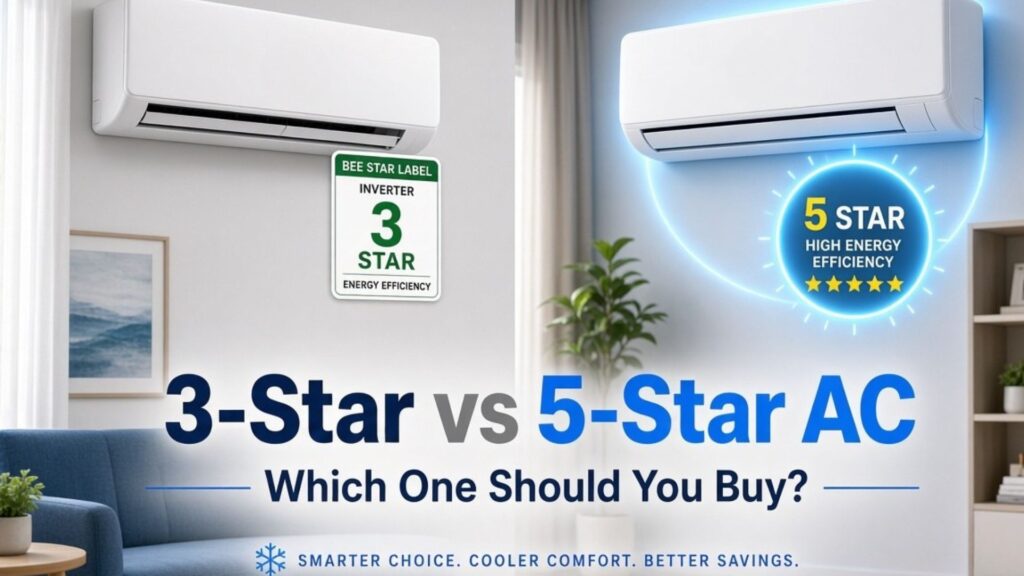
A 5-star AC is more energy efficient than a 3-star AC of the same capacity and can typically consume around 20% to 35% less electricity, depending on the specific models and operating conditions. A 3-star AC generally costs less upfront, while a 5-star AC can offer lower electricity costs over time, especially with frequent daily […]
AC Sleep Mode Explained: Does It Save Electricity?

AC Sleep Mode can help reduce electricity consumption by gradually adjusting the temperature and reducing cooling demand during the night. Instead of maintaining the same low temperature for hours, the AC adapts its operation as you sleep. However, actual savings depend on the AC model, temperature setting, room conditions, weather and usage duration. What Is […]
Split AC vs Inverter AC: What is the best AC for you?
If you want lower electricity bills, quieter operation, and long-term savings, an Inverter AC is usually the better choice. However, if you use your AC occasionally and want a lower upfront cost, a traditional Split AC can still be a practical option. The right choice depends on your budget, usage hours, and cooling needs. Buying […]
Best AC Temperature for Energy Saving: Ideal Settings to Reduce Electricity Bills

Air conditioners are essential during Indian summers, but many people still ask the same question: What is the best AC temperature for energy saving? The ideal AC temperature for most homes and offices is usually between 24°C and 26°C. This temperature range keeps the room comfortable while helping reduce electricity consumption and unnecessary strain on […]
Inverter vs Non-Inverter AC: Which One Should You Choose?
Inverter ACs are more energy-efficient (saving 30–50% electricity), quieter, and provide consistent cooling by adjusting compressor speed. Non-inverter ACs use a fixed-speed on/off cycle, making them cheaper upfront but less efficient and slightly noisier. Inverter ACs are ideal for long-term use, while non-inverter ACs suit occasional usage. What Is an Inverter AC? An inverter AC […]
1 Ton vs 1.5 Ton vs 2 Ton AC: Which Is Best for Your Room?
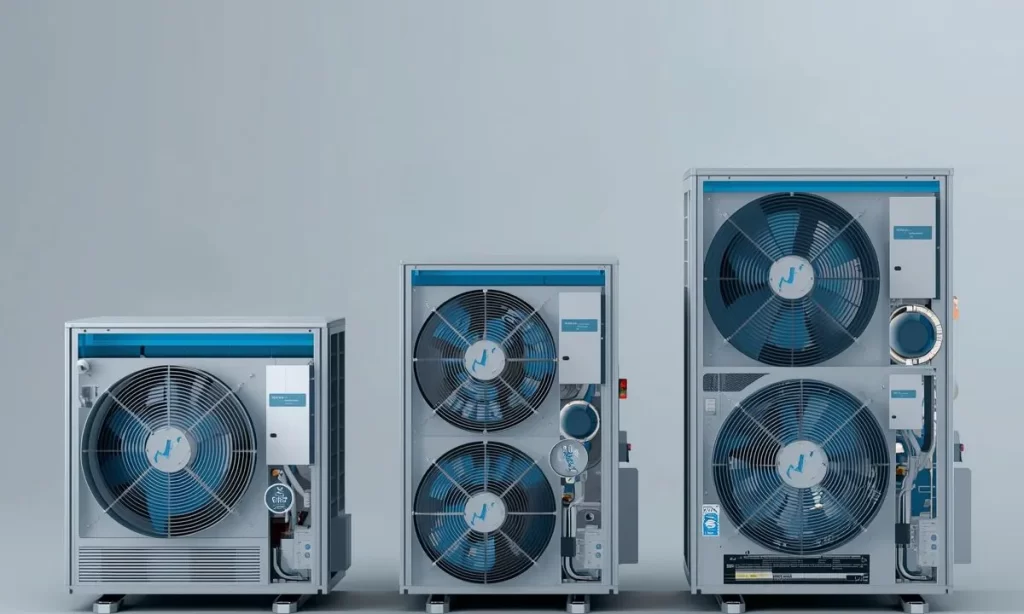
The right AC tonnage depends on your room size, heat exposure, and usage. A 1 ton AC is ideal for rooms up to 120 sq ft, 1.5 ton suits 120–180 sq ft, and 2 ton works best for 180–300 sq ft. Choosing the correct size ensures faster cooling, better energy efficiency, and lower electricity bills—especially […]
3 Star vs 5 Star AC: Which One Should You Choose?
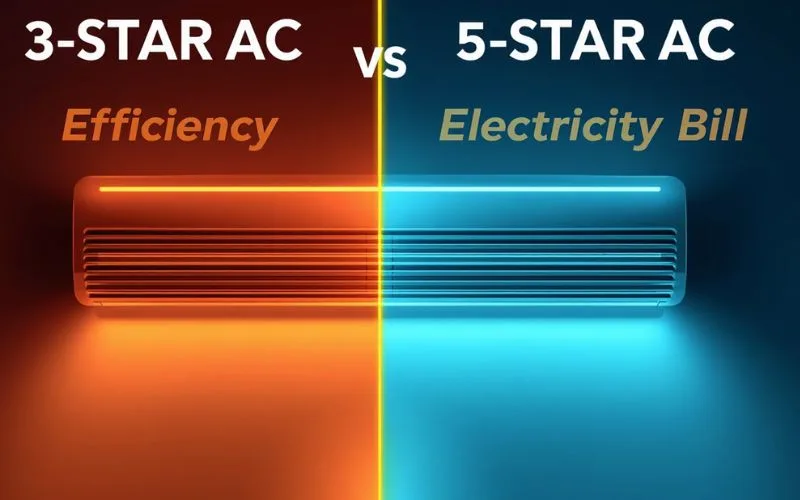
A 5 Star AC is better for long-term savings and daily use, while a 3 Star AC is ideal for occasional use and lower upfront cost. If you use your AC for more than 6–8 hours daily, a 5 Star AC can save 20–30% electricity annually, making it the smarter investment. What Does Star Rating […]
1.5 Ton AC vs 2 Ton AC: Which One Is Better for Your Room?

Choosing the right air conditioner size is important for efficient cooling, energy savings, and long-term performance. Many people get confused between 1.5 ton AC and 2 ton AC, thinking that a larger AC will always cool better. However, the ideal choice depends mainly on room size, sunlight exposure, and cooling load. A 1.5 ton AC […]
How to Choose the Right Size AC Unit
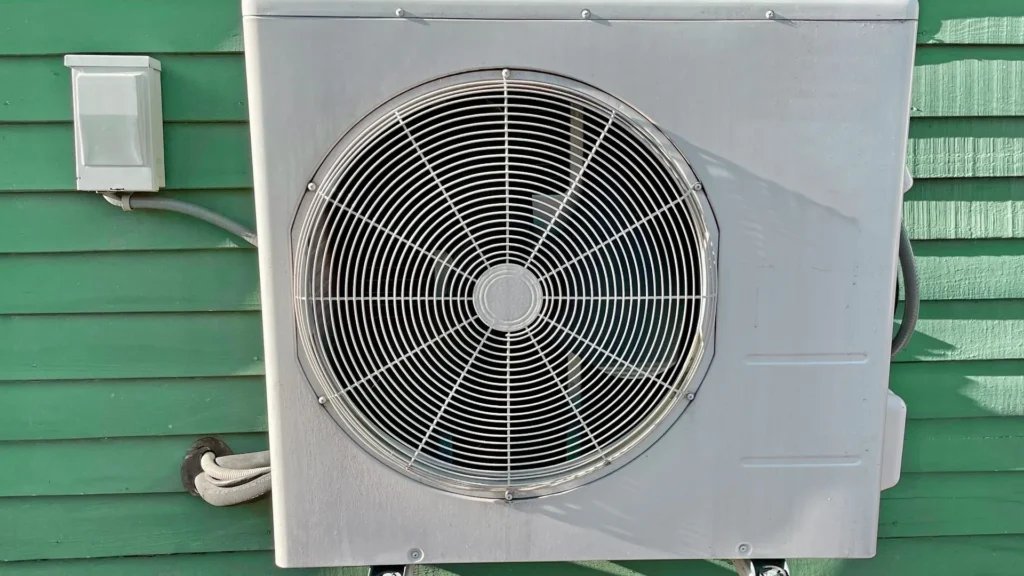
Choosing the right size AC unit is one of the most important steps in ensuring comfortable, energy-efficient cooling. Many people focus only on brand or price, but AC size (cooling capacity) plays a much bigger role in performance, electricity bills, and long-term durability. An AC that’s too small will struggle to cool the room, while an oversized […]